Wind
Pays when the wind in your cell crosses the line, in three steps, with an alert 36 hours before landfall.
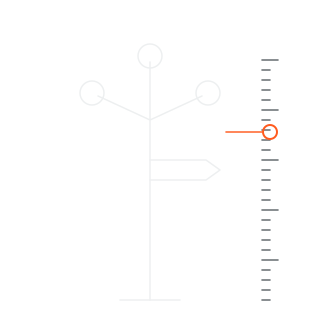
Typical strike
150 km/h
(01) The policy
Five numbers,
filled in for this peril.
The fifth number is your cell: we read it from the address you send, before the quote.
Index
Highest 10-minute mean wind speed at 10 m, read per 10 × 10 km cell
Typical strike
150 km/h
Exit · pays 100 %
189 km/h
Limit range
$250,000 – $38,000,000 per location
Tiers
Tier 1 · 150 km/h · pays 25 % — Tier 2 · 168 km/h · pays 50 % — Tier 3 · 189 km/h · pays 100 %
(02) How it’s measured
Meridian Ground Network · Halcyon Radar Mosaic · NOAA satellite imagery · Brackwater Coastal Buoys
At least two of the sources must land within the policy margin before the calculation agent signs. If they don’t, the fallback order in your schedule decides.
(03) Who buys it
Coastal hotel groups, marinas, cold-chain warehouses, utilities with exposed assets, retail chains with stores in hurricane belts

(04) The policy in full
The Wind policy reads one number: the highest 10-minute mean wind speed at 10 metres above ground in the cell that contains your insured location. A cell is 10 by 10 kilometres. Gusts are recorded but do not pay, because a gust is a short event and your losses come from sustained load on roofs, cladding and power lines.
The strike is where the policy starts to pay. For a coastal site on the Gulf Coast, a typical strike is 150 km/h, which pays 25 % of the limit. At 168 km/h the policy pays 50 %, and at 189 km/h it pays the full limit. Between two steps nothing is interpolated: you know on the day you buy the policy exactly what each reading is worth. During Storm Ines, cell FL-0417 peaked at 171 km/h, crossed Tier 2, and paid at T+41 h.
The reading is never taken from one instrument. The calculation agent builds the cell value from ground stations, a radar-derived wind field and a satellite estimate, and it signs the result only if at least two of the three land within ±3 % of each other. If they do not, the policy falls back to the station nearest your site and says so in the settlement note.
Prevention is part of the cover. When the forecast cone for a named storm reaches your cell, you receive an alert 36 hours before the expected peak, with the cell’s forecast reading against your strike, and a short list of what operators usually do at that stage: lower the sails of an outdoor structure, move stock off the ground floor, test the generator. Nobody has to act, and the premium does not change if you do not.
(05) Coverages